Idle Egg Factory
- 4.6
- Rating
- 50.00M
- Installs
- Free
- Price

 Analysis by App-foxy
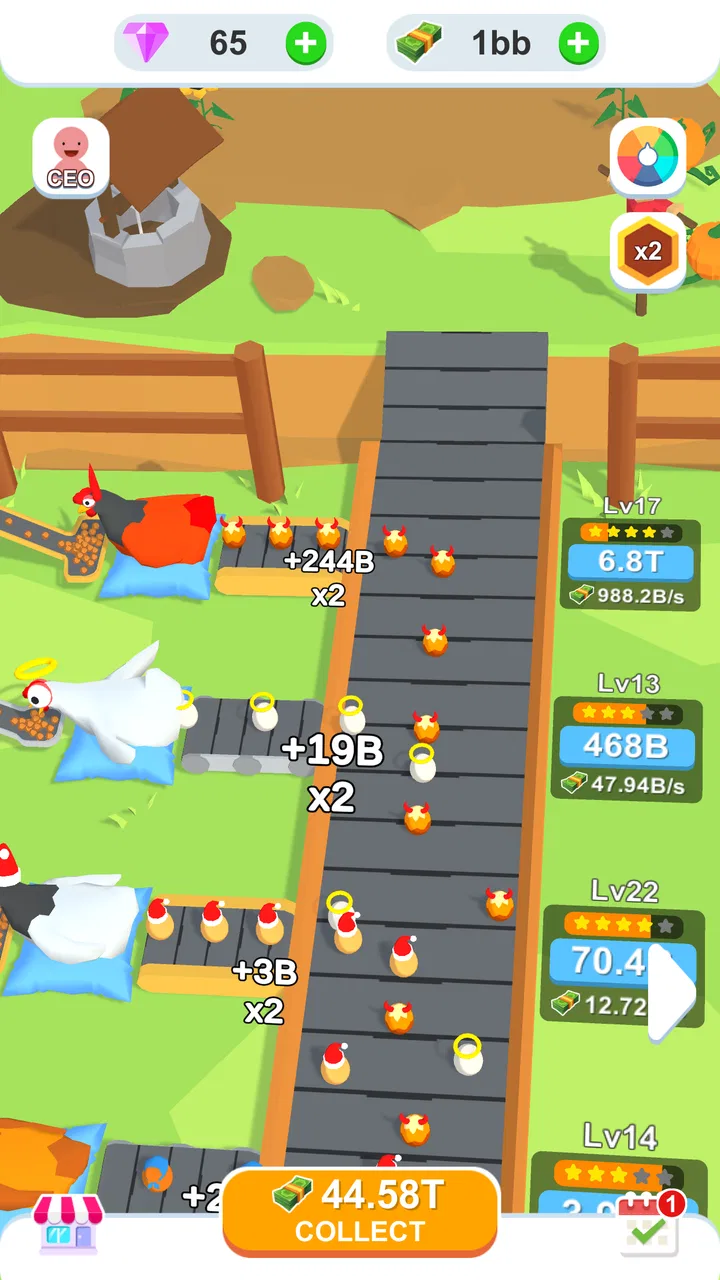
Idle Egg Factory is the kind of simulation game I open when I want something uncomplicated, steadily rewarding, and easy to leave running while my attention is elsewhere. Its central idea is wonderfully direct: build an egg-producing operation, improve its output, and keep the chain moving. That simplicity is both its biggest strength and its main limitation. I found it welcoming within minutes, but also easy to understand completely before long.
Developed by Solid Games, this free game sits in the casual simulation space rather than trying to imitate a detailed management simulator. The goal is not to study complicated markets or make dozens of difficult decisions. Instead, it turns factory growth into a sequence of small upgrades and satisfying increases. The result works best for players who enjoy watching progress accumulate, especially in short sessions between other activities.
How the egg factory feels in everyday play
The first few minutes establish the rhythm clearly. Eggs are produced, the operation earns resources, and those resources are used to improve the process. Each improvement makes the next stretch feel more productive, so the factory gradually changes from a modest operation into something more capable. I never felt lost about what I was supposed to do, which is important for a game designed around quick check-ins.
You May Also Like

 Blood Strike: 2.5 Anniversary
Blood Strike’s Loadouts Turn Every Drop Into a Tactical Gamble
A close look at Blood Strike’s custom loadouts: how fast access to signature weapons reshapes its battle royale rhythm, rewards preparation, and narrows the gap between fights.

 Pandora - Music & Podcasts
Pandora’s Music Is Easy to Start, but Harder to Recover
Pandora’s strength is its low-effort path from a seed to a station. Its weak spot is how much confidence it asks you to place in connection, setup, and quiet recovery.

 8 Ball Pool
 Is Built on Rivalries, Rematches, and Routine
A close look at the rivalries, rematches, shared routines, and unanswered safety questions that turn a quick pool match into a persistent mobile community.

 Samsung Music
’s Quiet Strength Is Playing What You Already Own
Its reach comes less from spectacle than from dependable access to a personal library. That simplicity is both the app’s strongest retention engine and its ceiling.

 AccuWeather: Weather Radar
AccuWeather Review: A Quick, Clear Forecast for Everyday Decisions
For everyday plans, the best forecast is the one you can understand quickly. AccuWeather makes rain timing, radar, and local conditions easy to act on, with a few trade-offs.

 Hill Climb Racing
Why Hill Climb Racing Still Turns Crashes Into One More Run
A tiny car, a bumpy hill and one more upgrade: Hill Climb Racing keeps resurfacing because its simple chaos makes every near-miss feel personal.
More From Our News Desk
View All News


The strongest part of the design is its readable feedback. When I invest in progress, the result is easy to notice because the factory becomes more efficient and the numbers move faster. That immediate response gives the game its hook. It does not demand a long tutorial or a complicated explanation; the production loop teaches itself through play.
This makes it particularly suitable for a realistic everyday scenario: I can start a session while waiting for a kettle to boil, make a few improvements, close the game, and return later for another round of decisions. It also fits a commute or a short break better than a strategy game that expects uninterrupted concentration. The game asks for attention in small portions, not in a prolonged sitting.
There is a useful distinction between actively playing and checking progress. During an active visit, I decide where to spend what I have earned and look for the most sensible improvement. Between visits, the appeal is seeing how much the operation has advanced. That separation gives the game a comfortable idle rhythm, although players who want constant interaction may find the waiting less exciting.
Progress is clear, but the decisions stay light
I liked that the game does not bury its main loop under excessive menus. The factory concept remains visible, and the purpose of upgrades is generally understandable. This is a good choice for a simulation aimed at a broad audience, including people who do not normally play management games.
At the same time, the decisions are not especially deep. I was usually choosing between making production faster, increasing returns, or pushing the next stage of growth rather than balancing a complicated network of suppliers, workers, storage, and demand. That is not a flaw for everyone. It means the game is relaxing and approachable, but it also means experienced simulation fans may finish exploring its strategic possibilities quickly.
One practical tip is to avoid spending every reward immediately just because an upgrade is available. I found the experience smoother when I paused briefly and considered whether a smaller improvement would speed up the next purchase or whether saving for a more noticeable step made more sense. The game is forgiving enough for casual experimentation, but a little patience makes the progress feel less random.
Another useful habit is to treat each return visit as a short planning session rather than tapping without thinking. Before collecting or investing, I check what the next meaningful improvement requires and decide whether my current resources are better used now or held for that target. This small routine adds a layer of personal strategy without turning the game into work.
Why the presentation suits the concept
The egg-factory theme gives the game a playful identity that separates it from more familiar idle games based on mining, restaurants, or generic businesses. The subject is immediately understandable, and the production chain provides a visual reason for the constant upgrades. I never needed a long explanation to understand what was improving.
That clarity also makes the game accessible to younger players. Its content rating is Everyone, and the uncomplicated premise avoids the pressure of learning a complex fictional world before the game becomes enjoyable. A parent looking for a low-stakes simulation to share with a child may find the factory idea easier to explain than a more elaborate economic game.
Still, the light presentation should not be mistaken for a full management sandbox. The factory is mainly a framework for incremental progress. If you are looking for detailed logistics, realistic production problems, or decisions with several competing consequences, a traditional tycoon game will probably give you more to think about.
The real weakness is repetition
My main reservation is that the central loop can become repetitive once the initial novelty fades. Producing, collecting, upgrading, and returning later is pleasant, but the actions remain close to one another throughout the experience. The game’s satisfaction comes from acceleration and accumulation, not from regularly introducing a new kind of challenge.
This matters because idle games depend heavily on how long their progression remains interesting. At first, every improvement feels meaningful. Later, the same pattern can feel like maintenance. I would recommend playing in short sessions if you notice yourself checking the game automatically rather than because you are enjoying the decisions. Taking breaks helps preserve the sense of progress.
The free-to-play structure also deserves a realistic look. The game can be installed and played without an upfront charge, while optional purchases range from $0.99 to $99.99 per item. That wide range means players should decide early how they want to approach the game. I personally prefer treating purchases as unnecessary extras and judging the experience by its ordinary progression, because spending can reduce the satisfaction of earning improvements gradually.
For anyone who is sensitive to monetization in idle games, this is the point to consider carefully. Even when the core loop is enjoyable, the temptation to speed up progress can change the tone from relaxing to impatient. I would not choose this game for a player who wants a completely purchase-free experience or who dislikes seeing premium options in a progression-focused game.
A related trade-off is that the game’s convenience can work against engagement. Because it is designed for idle progress and quick returns, it does not always reward close attention. If I wanted a game that demanded active skill, precise timing, or creative problem-solving, I would choose a puzzle game, an action title, or a deeper business simulator instead. This one is about gentle momentum.
Who will get the most from it
The best audience is someone who enjoys incremental games but wants a particularly easy entry point. You do not need prior knowledge of simulation games, and the egg-production theme is simple enough to understand immediately. It is also a good fit for players who like opening a game several times during the day rather than committing to one long session.
I can also see it working for people who enjoy background progression while listening to music or a podcast. The game does not require the same sustained focus as a competitive title, so it can occupy a small part of your attention. That said, I would avoid treating it as a multitasking game if you are trying to concentrate on something important; the point is casual entertainment, not productivity.
Families may appreciate the accessible premise and Everyone rating, but the depth is modest. A child who likes watching numbers rise and making simple upgrade choices may stay interested. A child who wants constant surprises, storytelling, or direct control over characters may lose interest sooner.
Players who should skip it are those seeking a demanding economic simulation. The factory theme may suggest a detailed industrial game, but the actual experience is much lighter. It is also a poor match for anyone who needs a strong narrative, competitive multiplayer, or a large variety of mechanics to remain engaged.
How it compares with other idle and simulation choices
Compared with a conventional tycoon game, Idle Egg Factory is easier to enter and less mentally demanding. Traditional alternatives usually ask you to manage several systems at once, such as staffing, pricing, construction, or customer satisfaction. This game narrows the focus to production and improvement, which makes it more relaxing but less strategically rich.
Compared with other idle games, its egg-factory setting gives the progression a more concrete identity than a generic collection of counters. You are not simply increasing an abstract business; you are building around a recognizable production idea. The trade-off is that the theme alone cannot solve the repetition problem. Once the novelty of the setting settles, the quality of the experience depends on whether you enjoy the upgrade rhythm itself.
It also differs from active simulation games because the best moments are not necessarily moments of skill. The pleasure comes from planning a purchase, seeing the output improve, and returning to find that the operation has continued moving forward. If that sounds satisfying, the game is likely to fit. If you want every minute to contain a meaningful action, another category will serve you better.
Practical details before installing
The game is free, carries an Everyone age rating, and supports Android devices running at least version 6.0. Its current version is 3.3.8, so users with older phones should still check that their device meets the operating-system requirement before trying it.
Its audience is already substantial: the game has passed 50 million installs, with an average rating of 4.6 from around 269 thousand ratings and roughly 6.6 thousand written reviews. Those figures suggest that the straightforward idle format has broad appeal, although popularity does not change the central question of whether you enjoy repetitive incremental progress.
One reason I understand that appeal is the low learning cost. I can hand the game to someone unfamiliar with idle simulations and explain the basic idea almost immediately. There is no need to memorize a control scheme or understand a long backstory. The first useful decision arrives quickly, which makes the game easy to sample without a major time commitment.
The more important question is what happens after that first sample. My advice is to judge it by the feeling of returning to improve a process, not by the novelty of producing eggs. If you enjoy small gains and gradual acceleration, the simplicity becomes calming. If you need variety to stay interested, the same simplicity becomes a limitation.
My verdict after spending time with the factory
Idle Egg Factory is a friendly, low-pressure simulation built around the pleasure of watching a small operation grow. I recommend it to casual players who want short sessions, clear goals, and progress that continues without demanding constant attention. Its egg-production theme is distinctive enough to make the familiar idle formula feel approachable, and its controls are simple enough for almost anyone to understand.
I would not recommend it as a replacement for a deep tycoon game. The strategic choices remain light, the loop can become repetitive, and optional purchases may bother players who prefer strictly purchase-free progression. Those are meaningful limits, not minor details.
For the right person, though, those limits are part of the appeal. This is a game I would suggest to a friend who wants something relaxing to check during spare moments, especially if they enjoy the quiet satisfaction of turning small upgrades into a steadily larger result. If you want complexity, competition, or constant action, look elsewhere. If you want a simple factory that keeps moving while you do other things, Solid Games has made a pleasant and accessible choice.
FAQs for Idle Egg Factory
01What is the main objective of Idle Egg Factory?
Idle Egg Factory is a simulation game where players manage an egg production line. The primary goal is to optimize and expand your egg factory to produce as many eggs as possible. Players must strategize on upgrading their equipment, hiring staff, and automating processes to maximize profits.
02Is Idle Egg Factory free to play?
Yes, Idle Egg Factory is free to download and play on both Android and iOS platforms. However, the game offers in-app purchases which allow players to buy in-game currency or special items that can enhance gameplay and help progress faster.
03Does Idle Egg Factory require an internet connection?
Idle Egg Factory can be played offline, making it convenient for users without a stable internet connection. However, certain features like in-app purchases and leaderboard rankings require an internet connection to function properly.
04How does progression work in Idle Egg Factory?
Progression in Idle Egg Factory involves upgrading equipment, unlocking new production lines, and expanding the factory. Players earn currency by selling eggs, which can be reinvested into the factory. As you progress, the game introduces new challenges and opportunities to increase production efficiency.
05Are there any ads in Idle Egg Factory?
Idle Egg Factory contains ads that may appear during gameplay. Players can choose to watch ad videos voluntarily to earn rewards or speed up certain processes. For those who prefer an ad-free experience, an option to remove ads through an in-app purchase is usually available.
Pros
- Simple and addictive gameplay loop.
- Minimalist and intuitive interface.
- Offline play available.
- Regular updates with new features.
- Light on device resources.
Cons
- Repetitive tasks can become tedious.
- In-app purchases can be expensive.
- Limited customization options.
- Lacks advanced strategic elements.
- Ads can be intrusive without purchase.

Idle Egg Factory
Gallery